


In photography, composition involves thoughtfully positioning visual elements inside the frame to guide the viewer’s eye, achieve harmony, and convey a message. While equipment and editing can refine an image, photography composition is what gives a photograph structure and impact. This guide outlines core principles and practical techniques you can apply across genres, from landscapes and architecture to street and documentary photography.
If you’re new to photography, these composition basics will help you move beyond snapshots and start making intentional images. The techniques here are suitable for photography beginners using a phone or camera and cover beginner-friendly composition tips such as framing, the rule of thirds, leading lines, and creating depth. See: A beginner’s guide to depth of field.
Contents

Start with Creative Intent
Strong photography composition is often what separates a competent photograph from a memorable one. Treat it as a learnable skill: improvement comes from making deliberate choices about what to include, what to exclude, and where to place visual weight in the frame. Expensive gear is not required; consistent practice and critical observation are.
Photography Composition : The rule of thirds
The rule of thirds is a practical starting point for placing subjects. Enable the grid overlay on your camera or phone, then position key subjects or horizons along the grid lines or near the intersection points rather than centring everything by default. This typically produces a more dynamic balance and gives the viewer’s eye a clear route through the frame.
Horizon placement
Avoid placing the horizon exactly in the middle of the frame unless you are aiming for a specific symmetrical effect. As a rule, give more space to the most visually interesting area: place the horizon lower to emphasise sky and weather, or higher to emphasise foreground texture and detail.

Read more: How to Improve your Long Exposure Photography
Breaking the rule: centring and symmetry
Composition “rules” are guidelines, not constraints. Centring can be highly effective when the scene is symmetrical or when you want a deliberate, graphic feel. In street and documentary work, a centred subject can also create a strong, cinematic emphasis. Choose centring intentionally, use it to support the subject rather than out of habit.
Use leading lines to guide the eye
Leading lines help direct attention and create a sense of depth. Look for roads, rivers, fences, shadows, corridors, or repeating architectural edges that point toward the subject or into the distance. Align the frame so the line clearly enters and travels through the image, rather than cutting across it without purpose.

Build depth with layers
Depth helps a photograph feel dimensional rather than flat. Where possible, organise the scene into foreground, middle ground, and background elements, for example, textured rocks in the foreground, a subject or pathway in the middle distance, and weather or hills beyond. Even in simpler scenes, a single foreground element can add scale and guide the viewer into the image.
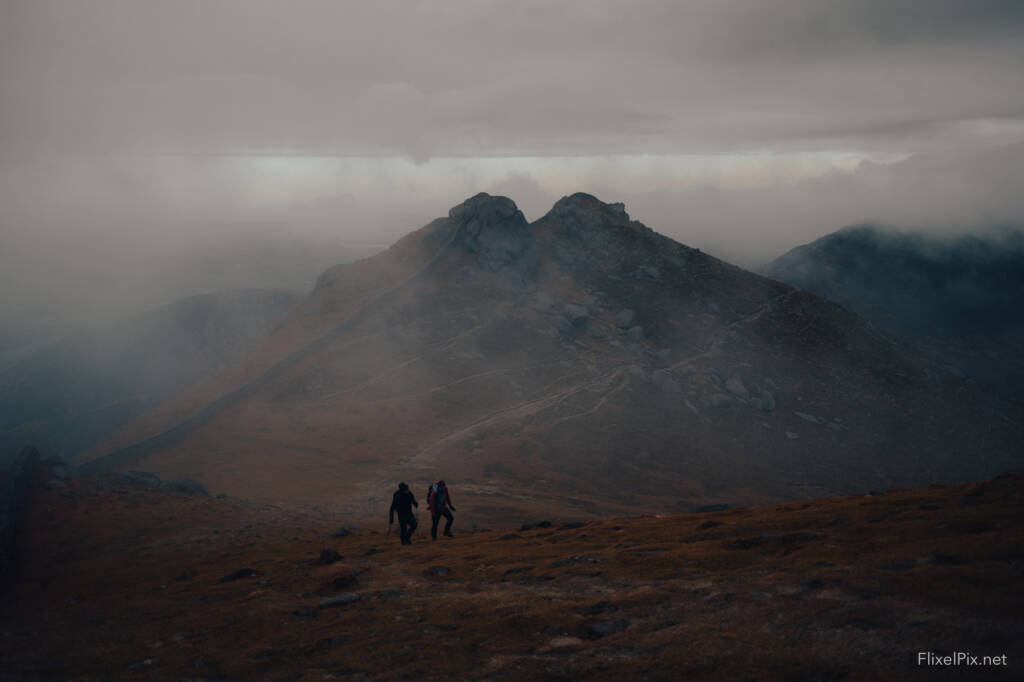
See: Mourne Mountain Gallery (Northern Ireland)
See Northern Ireland Landscape Photography
Change viewpoint and position
Actively change your viewpoint before adjusting your zoom. Step closer, move to the side, crouch, shoot from a higher angle, or wait for a cleaner background. Small changes in position can significantly improve alignment, reduce distractions, and strengthen the relationship between elements in the frame.

See: The Fujifilm X100VI London Photography
Use light as a compositional tool
Light influences what the viewer notices first and how the scene feels. Early morning and late evening often provide softer, directional light that reveals texture and adds atmosphere. Harsh midday light can reduce depth and contrast, making scenes feel flatter. When possible, choose shooting time and angle to put light where you want attention to land.

As you frame the shot, identify the brightest areas and decide whether they support or distract from the subject. If highlights pull attention away, adjust position, exposure, or timing to simplify the light pattern. In many images, the photography composition is effectively built around light and shadow rather than objects alone. See the Portrait Photography Gallery.

Simplify the frame
Strong photography composition is usually simple. Remove or minimise cluttered backgrounds, bright distractions, and unnecessary details that compete with the subject. Use negative space (open sky, fog, water, shadow, plain walls) to isolate the main element and build mood. If an object does not add meaning, reframe to exclude it.

Simplicity is especially important in storytelling and documentary contexts. Aim for compositions where every element supports the message: gestures, setting, and key details should reinforce the subject rather than compete for attention. If something is not contributing, remove it by changing position, waiting for a cleaner moment, or adjusting your framing.
Use timing and patience
Many strong photography compositions depend on timing. If the scene is almost working, wait for a person to enter the frame, for a gap in the background, for a shift in light, or for weather and movement to align. A few seconds of patience can turn a busy frame into a clean, intentional image.

Captured with the Fujifilm X20 on Tyrella Beach, County Antrim, Northern Ireland
Consider a pre-shot thought Process
If there is time, consider a pre-shot thought process. As you become more proficient this process will get faster.
- What is the photograph about (the subject and the message)?
- Where does the viewer’s eye land first and is that intentional?
- What is distracting, and can it be removed by reframing or changing position?
- Is there a clearer angle, cleaner background, or stronger light direction?
- Can the frame be simplified, or can you move closer to strengthen the subject?
Photography Composition: Conclusion
Photography Composition is ultimately the skill of seeing clearly and choosing deliberately. As you practise, you will start to recognise balance, shape, light, and emotional emphasis more quickly, and your decisions will become more instinctive. Use the guidelines in this document as tools, apply them consistently, then adapt them to suit the subject and your personal style. Over time they will become second nature.
Links
Photography eBooks
Photography Blog
Shooting Shallow
The Long Exposure eBook
Follow on Instagram
A Beginner’s Guide to Depth of Field
Cloghan Point Long Exposure Photography
Discover more from DC
Subscribe to get the latest posts sent to your email.
