

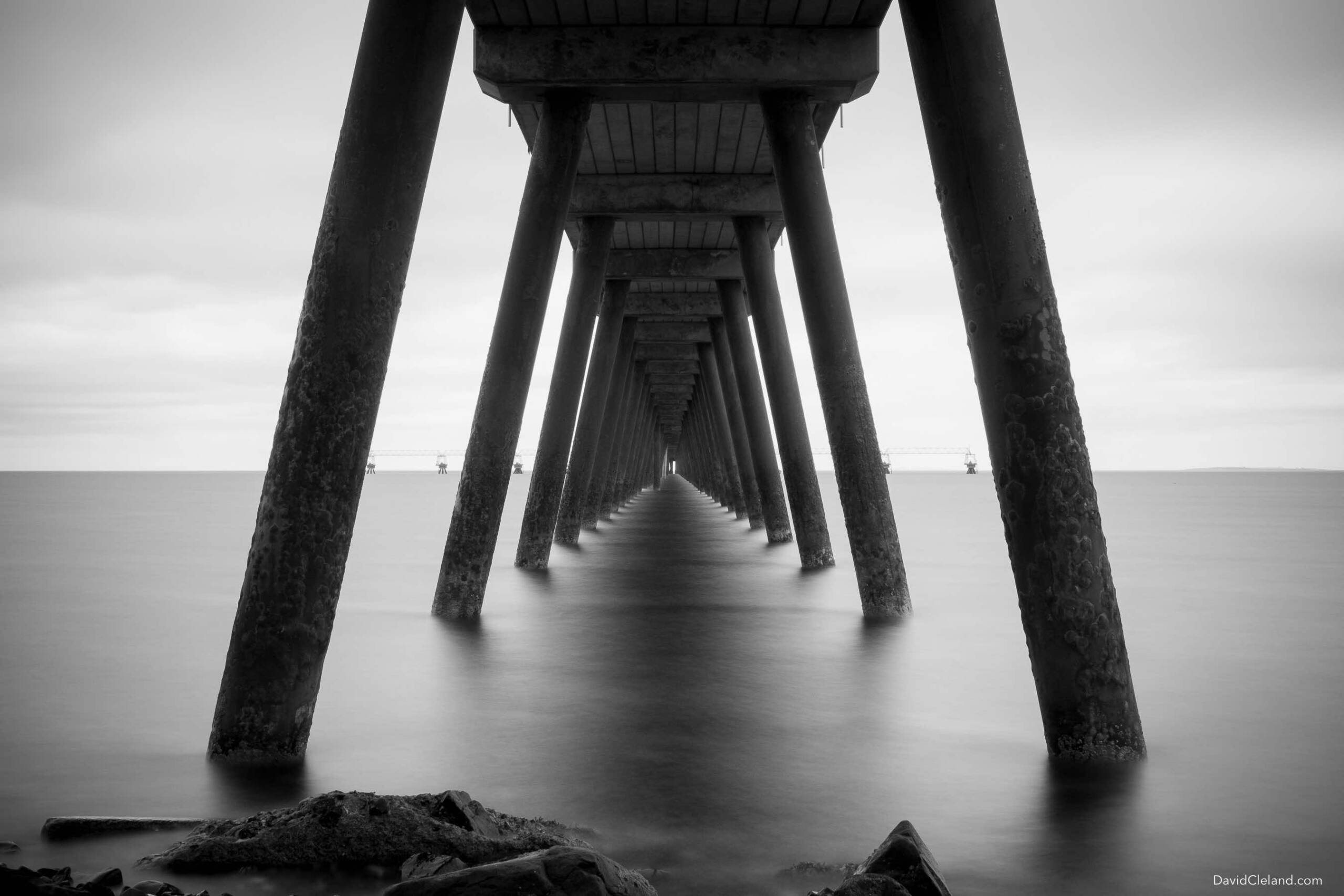
Five years ago, on a cold evening along the County Antrim coast, we headed towards Whitehead with one goal in mind capturing some long exposure photography around Cloghan Point and the oil terminal.
The conditions could not have been better. Belfast Lough was almost completely still, heavy cloud drifted slowly overhead, and the fading evening light created that soft blue tone that works perfectly for long exposures.
Contents
Actually finding the beach at Cloghan Point turned into far more of an adventure than expected. After taking several wrong turns, wandering into areas we probably should not have been in, and almost giving up entirely, a local resident eventually pointed us towards a narrow road leading down to the shoreline.
Cloghan Point Oil Terminal
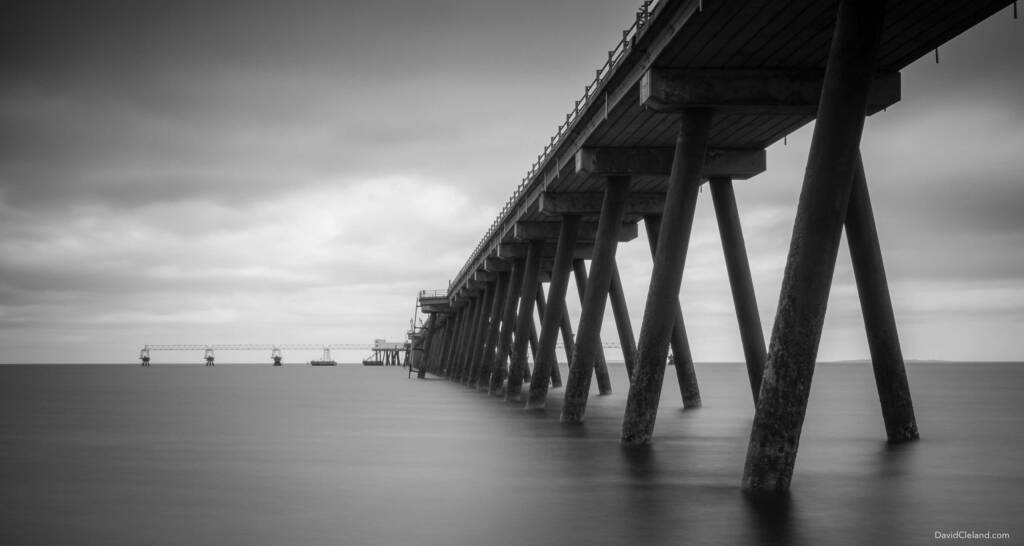
In 2012 it was possible to access the beach around Cloghan Point. Today the area is no longer accessible, which makes looking back on the photographs from that evening a little more significant.
The Cloghan Point Oil Terminal itself made for an incredible subject. Sitting quietly along the edge of the coastline, the industrial structures felt strangely out of place against the calm water and rugged shoreline.
Large steel frameworks stretched out into the sea while ageing pipelines and weathered platforms created perfect leading lines through the frame. The scale of the jetty is physically intimidation.
Long Exposure Photography
The contrast between the heavy industrial structures and the smooth, softened sea gave the images an almost cinematic atmosphere. The Cloghan Point shoreline itself had a strange atmosphere. Rusted remains of old structures lined the coast, debris was scattered across the beach, and apart from the sound of water moving against the rocks there was almost complete silence. It felt remote, forgotten, and unlike anywhere else I had photographed before.
The lead image was captured with the Fujifilm X-Pro1 and the 35mm lens. I used my ND10 filter to reduce the amount of light reaching the sensor. The shutter was open for a full 30 seconds, I use a shutter release cable to ensure there is no initial camera shake. For more information on how to capture long exposure photography check out The Long Exposure eBook.
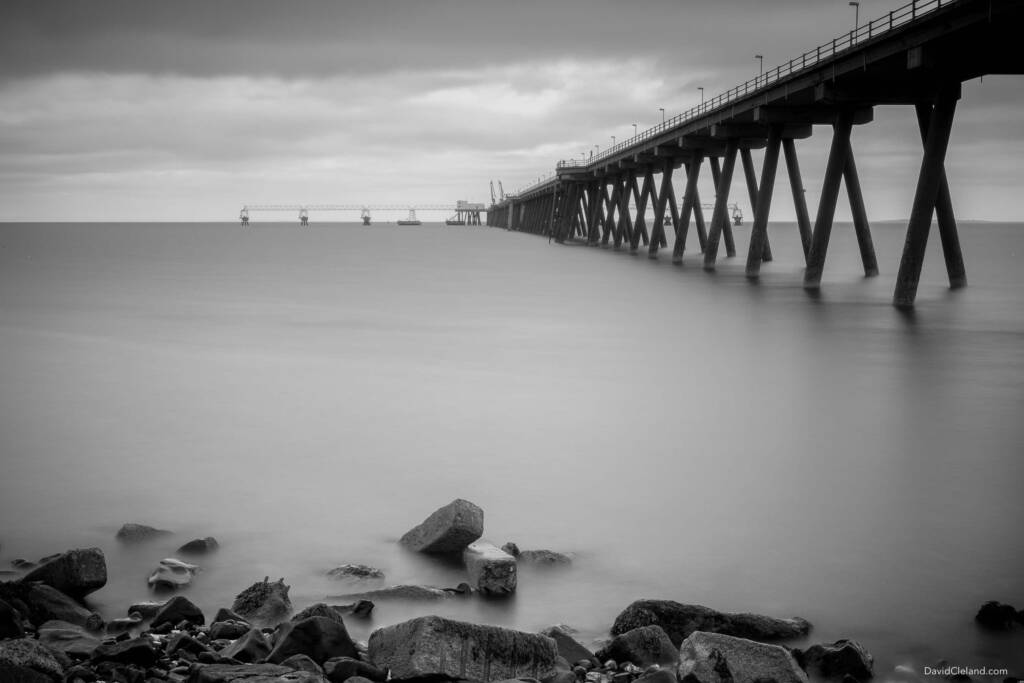
Walking underneath the old jetty revealed even more detail. Broken timber, corroded metal, and pools of still water reflecting the evening sky meant every direction seemed to offer another composition worth photographing.
For this trip I was shooting with the Fujifilm X-Pro1 paired mainly with the 35mm and 18mm lenses. Combined with a lightweight travel tripod, it turned out to be the perfect setup for the conditions. Even standing on slippery rocks with waves moving around the tripod legs, the compact kit handled the long exposures without any problems.
What I remember most from the evening though was not the gear or even the photographs themselves. It was the freedom that came from travelling light. Carrying a smaller setup meant more exploring, more experimenting, and more time focusing on composition and light instead of managing heavy equipment.
Sometimes the best photography locations are not the famous ones. They are the hidden places you discover almost by accident while searching for something else entirely. It’s just a shame there can’t be a repeat visit.
You can generally access surrounding public areas around Whitehead and view the terminal and long jetty from coastal paths, roads, and viewpoints nearby. The beach under the jetty is no longer accessible to the public.
Links
The Long Exposure eBook
Northern Ireland Long Exposure Photography
Follow on Instagram
5 Easy ways to improve your Long Exposure Photography
Discover more from DC
Subscribe to get the latest posts sent to your email.
